

Buying a house, whether a plot you’ve built on in a society like Faisal Town Phase 2 or an already-finished home, is one of the biggest financial commitments most people make. Protecting that investment with the right home insurance in Pakistan matters just as much as the purchase itself, yet most buyers only start asking questions about property insurance in Pakistan after something’s already gone wrong.
This guide covers what’s actually available in the Pakistani insurance market, what Fire and Allied Perils Insurance costs, how the home insurance claims process works, and where Takaful home insurance in Pakistan fits in for buyers who want a Shariah-compliant option.
What Home Insurance Actually Looks Like in Pakistan
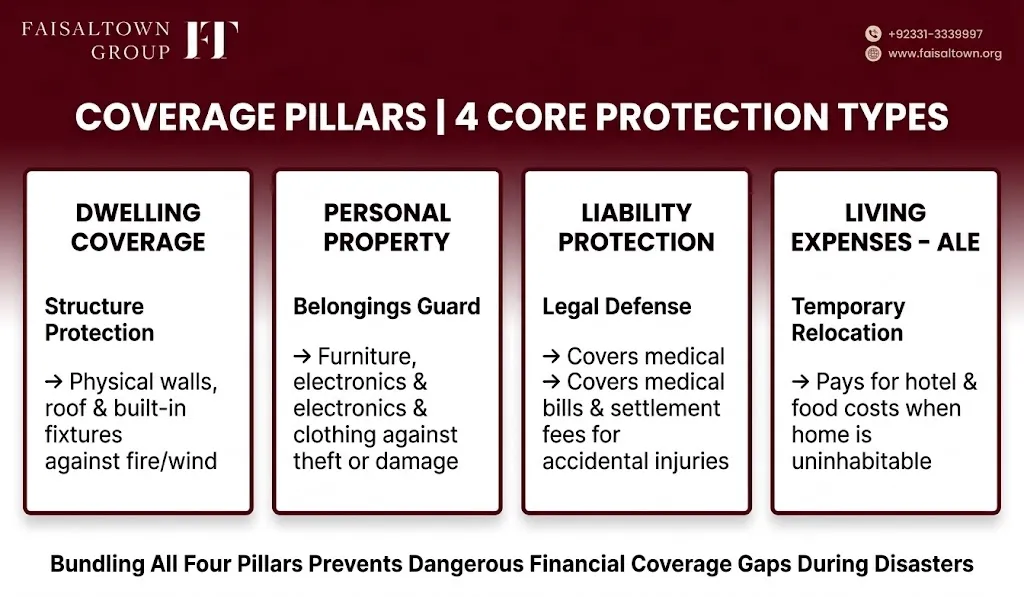
In Pakistan, what most people mean by “home insurance” is formally sold as Fire and Allied Perils Insurance, a policy protecting your house’s physical structure and contents against a defined set of risks. This differs from the broader “homeowners insurance” bundle common in Western markets, where liability, structure, and living expenses are typically packaged into one policy by default.
The Securities and Exchange Commission of Pakistan (SECP) regulates all insurance and Takaful providers here, and if you ever have an unresolved dispute with an insurer, the Federal Insurance Ombudsman is the body that handles complaints after the company itself has failed to resolve them. This regulatory structure differs meaningfully from countries where a state-level insurance department handles disputes, so knowing SECP is your reference point saves time if something ever goes wrong.
Unlike many countries, home insurance isn’t automatically required to buy property in Pakistan, since most purchases here happen through cash or developer installment plans rather than conventional mortgages. That said, skipping earthquake insurance in Pakistan and flood coverage entirely leaves your largest asset exposed, particularly given genuine local seismic and monsoon risk.
Home Insurance vs Other Property Coverage Types
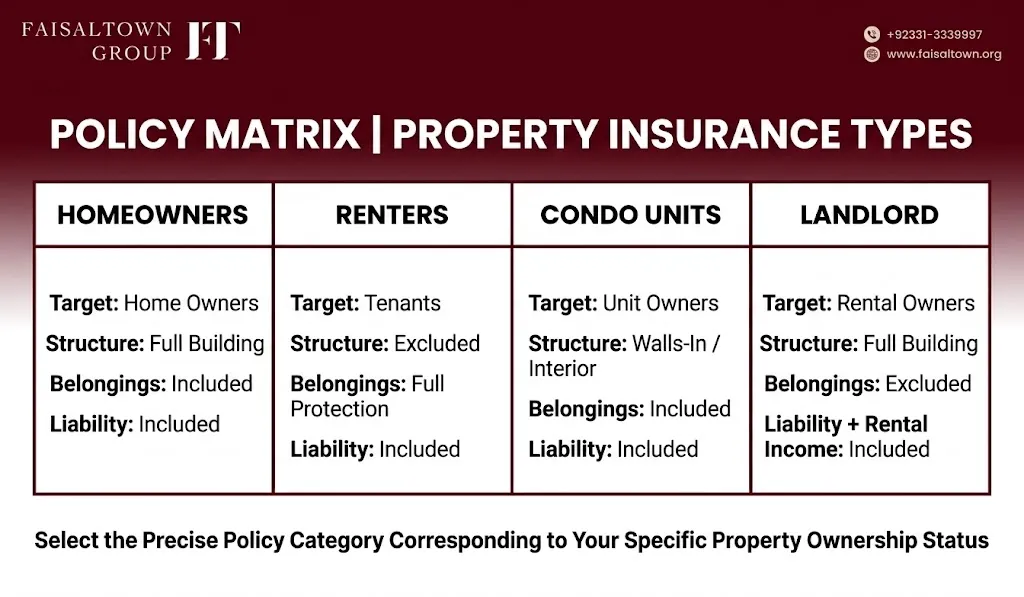
It’s easy to conflate different categories of property coverage, so a quick breakdown helps:
| Coverage Type | Who It’s For | What It Covers |
| Fire and Allied Perils (home insurance) | Homeowners | Structure and contents against fire, allied perils |
| Tenant’s contents cover | Renters | Personal belongings only, not the structure |
| Landlord’s property cover | Property owners renting out homes | Structure and loss of rental income |
| Construction/builder’s risk | Buyers actively building | Structure while under construction |
Choosing the right category depends entirely on whether you own the structure, rent it, or are still building it, since each product is priced and structured differently around that distinction.
Conventional Insurance or Takaful: Which Fits You
Pakistani buyers generally choose between two structurally different products covering the same risks.
| Factor | Conventional Insurance | Takaful (Shariah-Compliant) |
| Structure | Insurer bears the risk for a premium | Participants pool contributions to cover each other |
| Regulator | SECP | SECP, under Takaful rules |
| Common providers | EFU, Adamjee, IGI, Jubilee | Takaful arms of major insurers |
| Suitability | Widely available, standard terms | Preferred by buyers wanting Shariah compliance |
Both structures cover largely the same physical risks: fire, allied perils, burglary, and so on. The real difference is contractual. Takaful operates on mutual risk-sharing among participants rather than a conventional insurer-policyholder relationship, which is why Takaful home insurance in Pakistan appeals specifically to buyers prioritizing Shariah compliance over structure.
What a Standard Fire and Allied Perils Policy Covers
The base policy covers loss or damage from fire and lightning. Additional, commonly bundled allied perils coverage includes:
- Riot and strike damage
- Malicious damage
- Atmospheric disturbance, which includes flood damage in many Pakistani policies, unlike some markets where flood is always a separate product
- Earthquake fire and shock, genuinely relevant given Islamabad and Rawalpindi’s seismic zone classification
- Explosion and impact damage, including aircraft damage in rare cases
- Burst water pipes and impact damage
Burglary and theft protection is typically a separate add-on, issued alongside your standard fire policy rather than bundled in automatically. Always confirm which of these allied perils are actually included in your specific quote, since base policies vary between insurers.
Will Your Policy Actually Pay? A Claims Reality Check
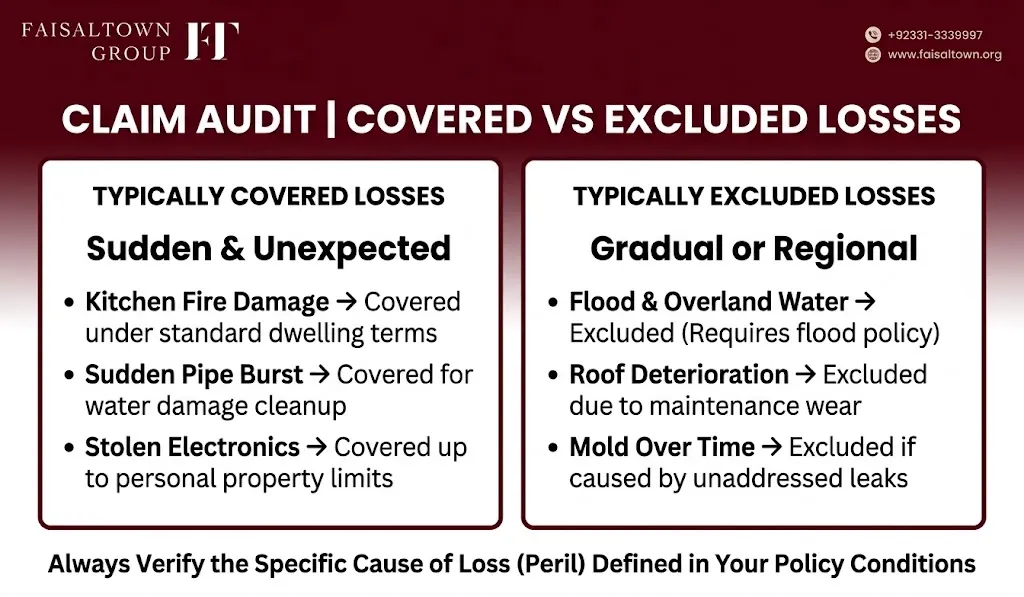
A common misconception is that having a policy means every kind of damage automatically becomes a paid claim. Whether a claim succeeds depends on what caused the damage, what your specific policy covers, what’s explicitly excluded, and whether you met the policy’s conditions.
| Situation | Why It Needs Careful Review |
| Fire damages a room | Generally covered, subject to policy terms |
| Burst pipe damages flooring | Sudden water damage is usually treated differently from gradual leakage |
| Roof leaks after years of neglect | Damage from lack of maintenance is commonly excluded |
| Earthquake damages the structure | Covered if earthquake fire and shock is included in your policy |
| Monsoon flooding enters the ground floor | Coverage depends on whether flood is included as an allied peril |
| Theft of household electronics | Usually needs a separate burglary add-on and proper documentation |
The right question after any incident isn’t “do I have insurance,” it’s “does my specific policy cover this specific cause of loss.” That distinction decides whether a claim gets paid or rejected.
What Drives Your Premium Cost
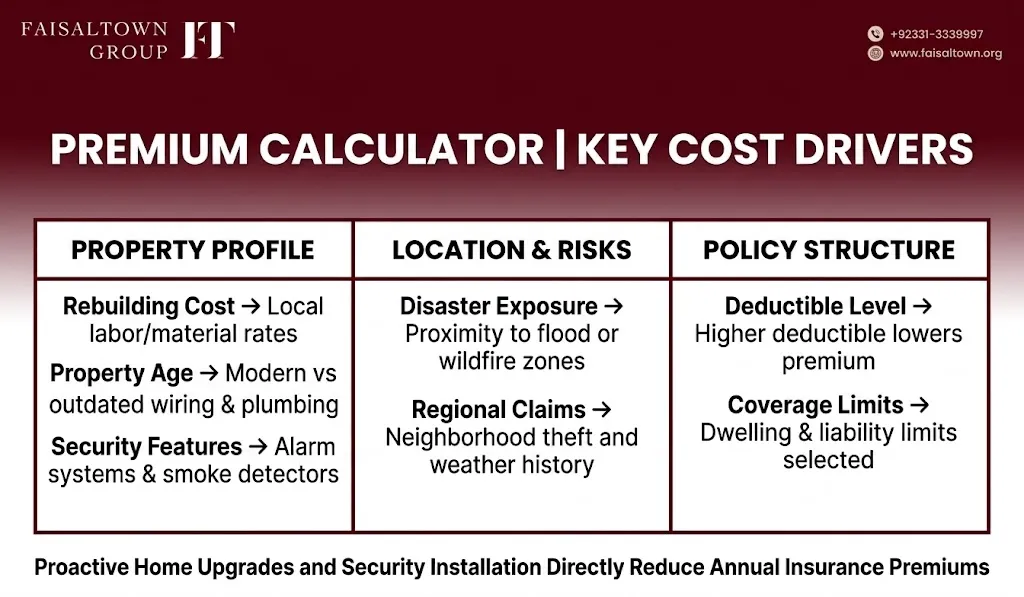
Insurers in Pakistan calculate your premium based on a handful of concrete factors:
- Sum insured, the declared value of your home and contents, since this sets your maximum payout
- Construction type and age, with newer, better-built structures generally costing less to insure
- Location and regional risk, including seismic zone and flood exposure for your specific area
- Security measures, like boundary walls, gated community access, or alarm systems
- Claims history, if you’ve held a policy previously
- Chosen add-ons, since bundling burglary, earthquake, and flood cover raises your premium proportionally
A house in a gated, well-planned society with clear street layouts and active security often qualifies for more favorable terms than a comparable standalone property in an area with less oversight.
Deductibles and Sum Insured, Explained Simply
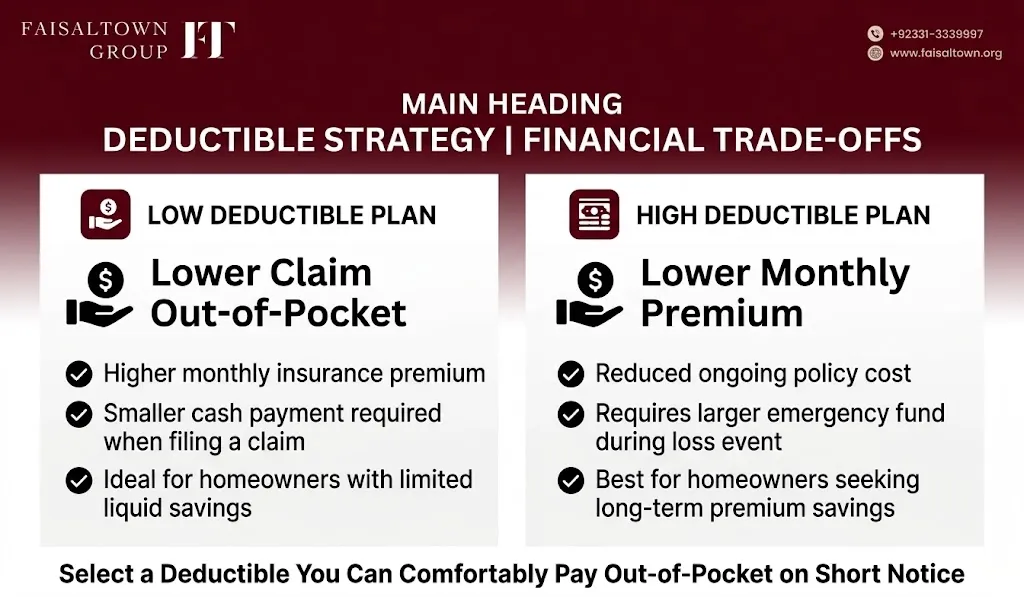
Your policy’s excess, sometimes called a deductible, is the amount you pay out of pocket before the insurer’s coverage kicks in. A higher excess generally lowers your premium; a lower excess raises it but reduces what you pay during a claim.
Separately, your sum insured should reflect your home’s actual rebuilding cost, not its original purchase price or current market value. Underinsurance to save on premium is one of the most common mistakes homeowners make, since it directly reduces what you’d actually recover after a major loss.
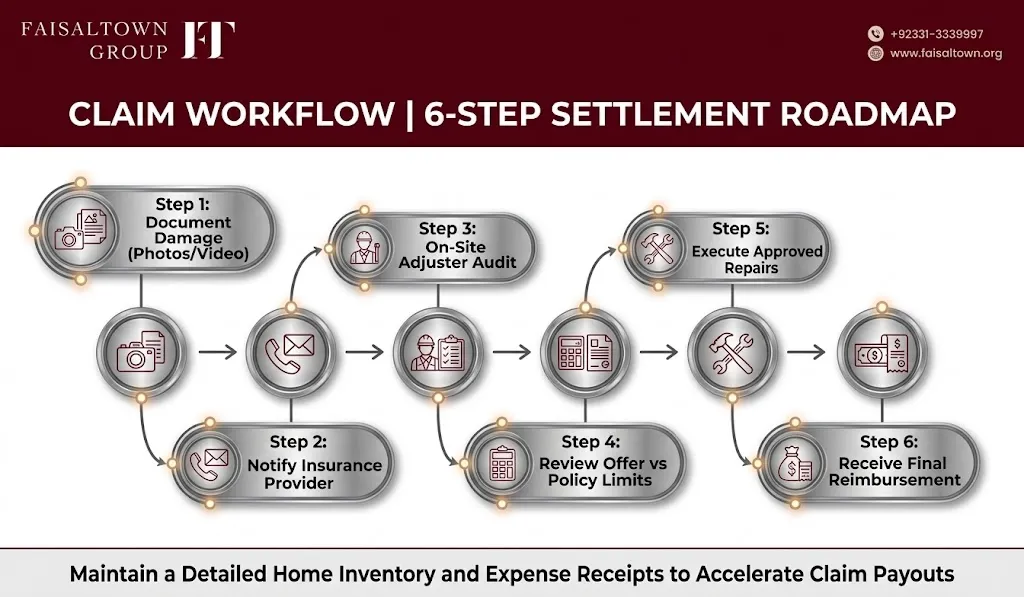
The Claims Process, Step by Step
- Document the damage immediately with photos and videos before anything is cleaned up or repaired.
- Notify your insurer as soon as possible, since most policies specify a reporting window.
- Meet with a surveyor, who assesses the damage and estimates the loss.
- Review the settlement offer against your policy’s sum insured and specific terms.
- Complete repairs, using approved contractors if your policy requires it.
- Follow up on payment, confirming it matches the agreed settlement.
Keeping a simple home inventory, receipts, and photos of valuable items well before you ever need to claim makes this entire home insurance claims process considerably faster.
Common Exclusions Worth Knowing in Advance
Even a solid policy has limits. Frequently excluded items include:
- Damage from gradual wear, neglect, or lack of maintenance
- Pest infestations
- Certain high-value items like jewelry beyond standard limits, unless specifically declared and insured
- War, nuclear risk, and similarly extreme excluded perils standard across the industry
Reading these exclusions before you need to file a claim, not after, is the only way to avoid an unpleasant surprise during an already stressful moment.
Practical Ways to Manage Your Premium
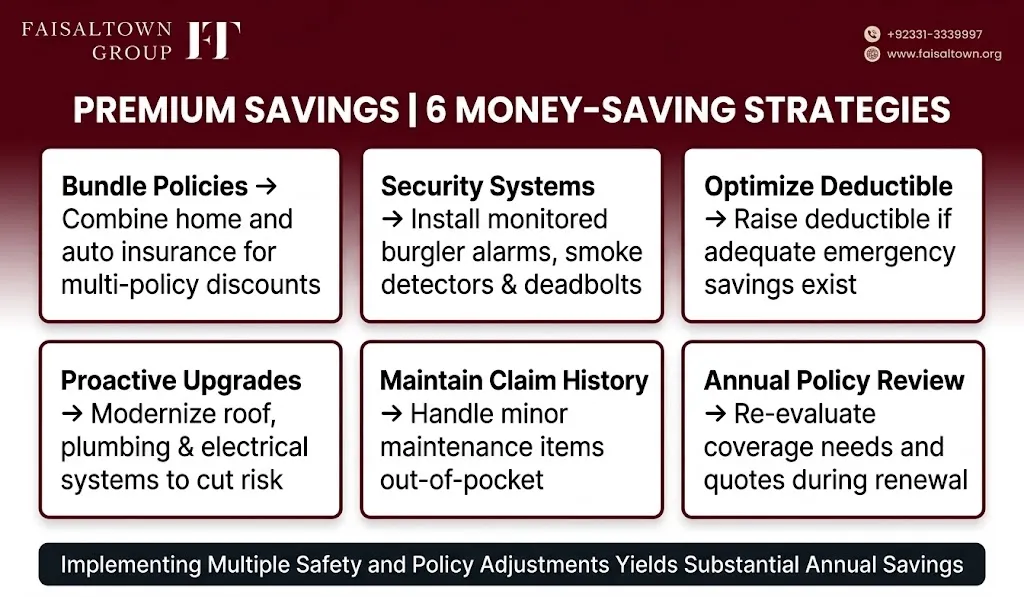
- Bundle fire and burglary coverage with the same insurer where discounts apply
- Improve physical security, boundary walls, gated access, and visible deterrents can lower perceived risk
- Choose a higher excess if you’re financially comfortable absorbing smaller losses yourself
- Review your sum insured annually rather than letting it drift from actual rebuilding costs
- Compare quotes from at least two or three providers, conventional or Takaful, before committing
- Ask specifically about earthquake and flood add-ons rather than assuming they’re included by default
Insuring a Plot vs an Existing House
This distinction matters specifically for buyers in a project like Faisal Town Phase 2, where much of what’s sold is land rather than finished construction.
An undeveloped plot typically has nothing to insure yet, since there’s no structure or contents at risk. Once construction begins, boundary walls and any completed structure can often be insured at replacement cost during the build. A finished house, whether in an established area or a newly built one, should be insured at full rebuilding cost from the day it’s occupied, not the original land price.
Protect Your Investment the Right Way
Understanding home insurance in Pakistan comes down to a few core ideas: know whether you want conventional or Takaful coverage, insure at true rebuilding cost rather than purchase price, and confirm exactly which allied perils, especially earthquake and flood, are actually included in your policy.
Whether you’re building on a plot in Faisal Town Phase 2 or insuring an existing home, take the time to compare quotes and read the exclusions before you need them.
Call +92 331 333 9997 or email info@faisaltown.org for guidance on protecting your property investment as you plan your purchase or construction.
Frequently Asked Questions
What does home insurance typically cover in Pakistan? Fire and lightning form the base cover, with allied perils like riot, flood, earthquake fire and shock, and impact damage available as extensions, and burglary usually as a separate add-on.
Is home insurance legally required in Pakistan? No. It isn’t mandated by law, though it’s strongly advisable given regional earthquake and flood risk.
What’s the difference between conventional insurance and Takaful? Conventional insurance has an insurer bear the risk for a premium. Takaful pools participant contributions on a mutual, Shariah-compliant basis to cover the same risks.
Does a standard policy cover flood damage? It depends on the specific policy. Many Pakistani fire policies include flood as an allied peril rather than excluding it outright, unlike some other markets, so confirm this explicitly with your insurer.
How is my premium actually calculated? Based on your declared sum insured, construction type and age, location and regional risk, security measures, and any additional perils you choose to add.
Who do I contact if my insurer won’t resolve a dispute? The Federal Insurance Ombudsman handles complaints in Pakistan, but only after you’ve first tried resolving the issue directly with the company. Complaints can be filed online through their official portal or via their helpline.
Should I insure a plot I haven’t built on yet? Generally no, since there’s nothing physical to insure until construction begins. Once you start building, ask your insurer about coverage for the structure and boundary wall as work progresses.
Can overseas Pakistanis buy home insurance for property back home? Yes, most major insurers and Takaful operators accept applications for property owned by overseas Pakistanis, though the process typically requires a local representative or power of attorney holder to handle documentation and any future claims in person.