
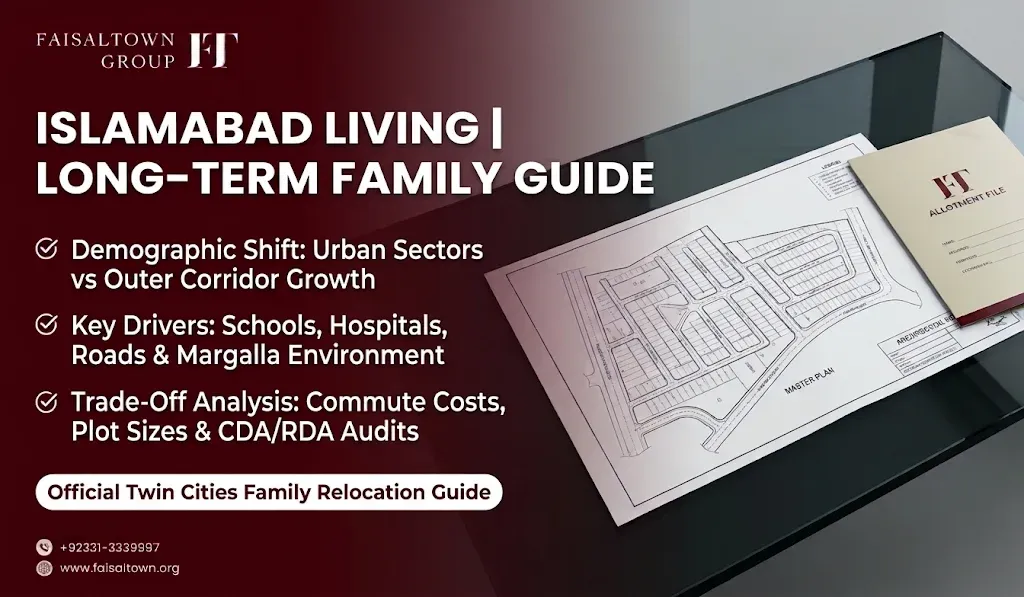
For a long time, Islamabad was a city people moved to for a posting and left when it ended. That’s changing. More families now see living in Islamabad as a long-term plan: a place to settle, raise children and look after ageing parents. The numbers back this up, but they also show something many people miss.
This blog looks at why families are choosing Islamabad, where that growth is actually happening, what life looks like in older sectors compared with newer communities, and the trade-offs worth thinking about before you commit to a move. It isn’t a sales pitch for the city. It’s an honest look at what works, what doesn’t, and how to decide.
Islamabad Living at a Glance
Families moving to Islamabad usually weigh:
- Schools and hospitals within reach
- Steady jobs and good road links
- A calmer, greener daily life
- Older sectors versus newer communities
- The approval status of any new scheme
- Rising pressure on water, schools and green space
Each of these looks different depending on which part of the city you choose.
1. The City Is Growing, Mostly at Its Edges
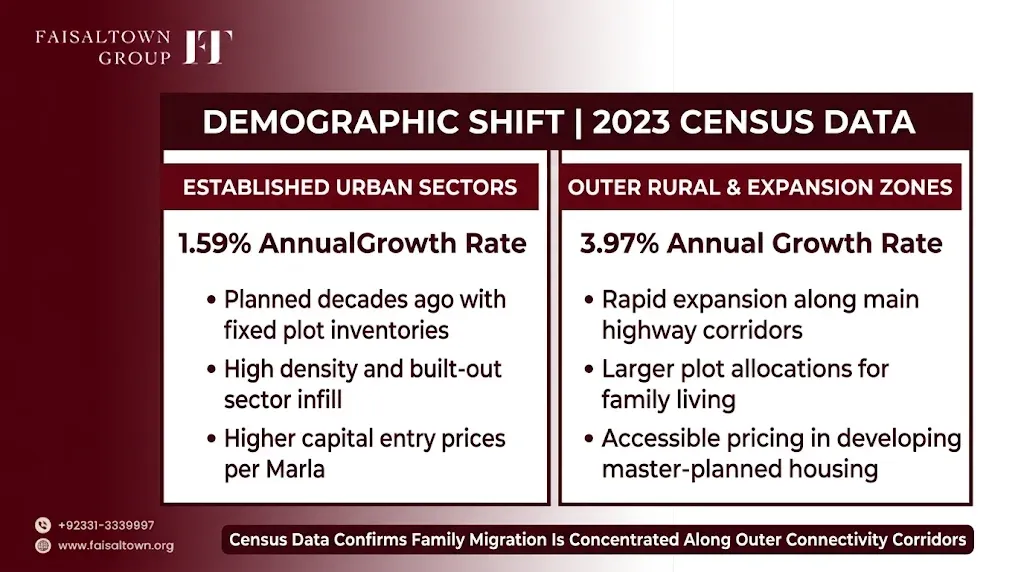
The 2023 census counted 2,363,863 people in Islamabad, up from 2,003,368 in 2017, an average yearly growth of 2.80%, according to the Pakistan Bureau of Statistics.
The more telling figure is where that growth landed. The same census shows the rural parts of the capital growing at 3.97% a year, against 1.59% in urban areas. In plain terms, families aren’t just choosing Islamabad. Many are choosing its outer zones, where space is easier to find and prices are lower than in the original sectors.
This pattern makes sense when you look at the sectors themselves. They were planned decades ago with a fixed number of plots, and most of those plots have long been built on. A family that wants a larger home, or simply an affordable one, often has to look beyond them. The result is steady growth along the main roads leading out of the city.
That growth brings opportunity, but it also means many families are moving into areas that are still taking shape. Understanding that difference is the starting point for any long-term decision.
2. What Draws Families to Islamabad
Schools and Health Care
For most parents, the decision starts with schools. Islamabad’s Federal Directorate of Education runs about 423 public schools and colleges with more than 200,000 students, according to a 2025 APP report. Private schools add many more options. The city also has major hospitals and specialist clinics, which matters a lot when grandparents live with the family.
For families coming from smaller towns, this concentration of services is often the deciding factor. Having a good school, a specialist doctor and a university within one city saves years of travel and disruption.
Work and Getting Around
Government offices, embassies, universities and a growing private sector keep jobs in the city. Roads to Rawalpindi, the motorway and the airport make it practical to live a little further out and still commute. For many families, main-road access shapes everyday travel time more than distance does.
Many households now have two working adults, often in different parts of the twin cities. For them, being close to a main road matters more than being close to the city centre.
A Quieter Pace of Life
Families coming from busier cities often mention the Margalla Hills, parks and lower density first. Quiet streets and space for children to play are hard to put a price on, and they’re often the reason people stay once they arrive.
There’s also a sense of order that many residents value. Planned roads, marked sectors and green belts make the city easier to live in, even when traffic and construction add their own frustrations.
3. Established Sectors or Newer Communities?
The move outward changes how families search. Instead of a small house in an older sector, many now compare a larger plot in a newer community where some facilities are still being built.
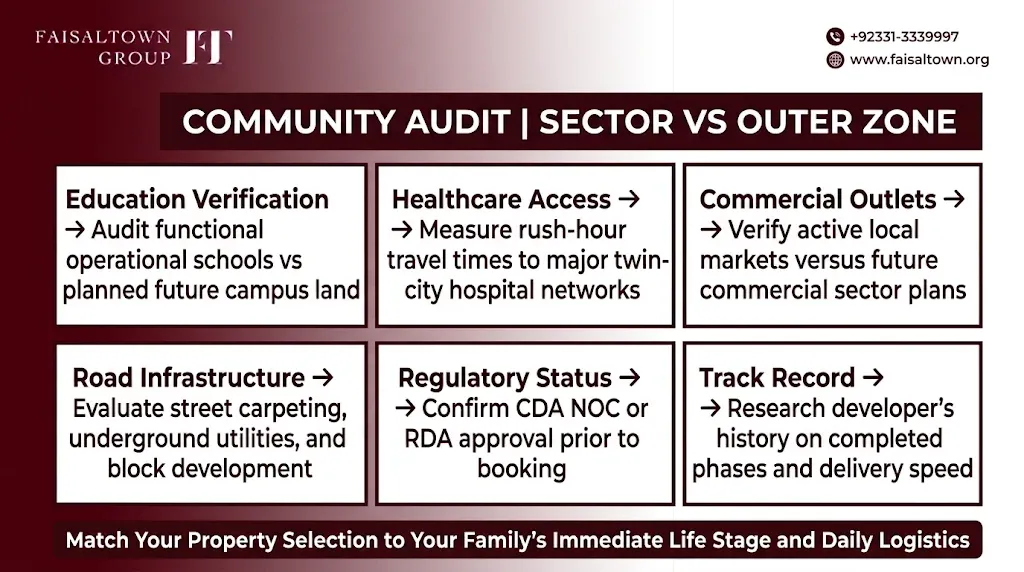
Here’s what to check on the ground for each family need:
| What Families Want | What to Check in Person |
| Nearby schools | Schools that are open now, not only planned |
| Hospital access | Travel time at rush hour |
| Daily shopping | Whether markets are running or still on the map |
| Safe, quiet streets | How developed the block and its roads are |
| Long-term value | Approval status and the developer’s track record |
Established communities such as Faisal Town Phase 1 suit families who want finished streets and services today. Newer areas suit those willing to wait for development in return for more space and a lower entry price.
Neither choice is wrong. A young couple with small children may happily wait a few years for a community to grow around them. A family with school-age children or elderly parents may need everything in place from day one. The right answer depends on where your family is in life, not on which option sounds better on paper.
4. The Real Cost of Living Further Out
A lower plot price on the edge of the city can look like a clear saving, but it isn’t the whole picture. Daily life has its own costs, and they add up over the years.
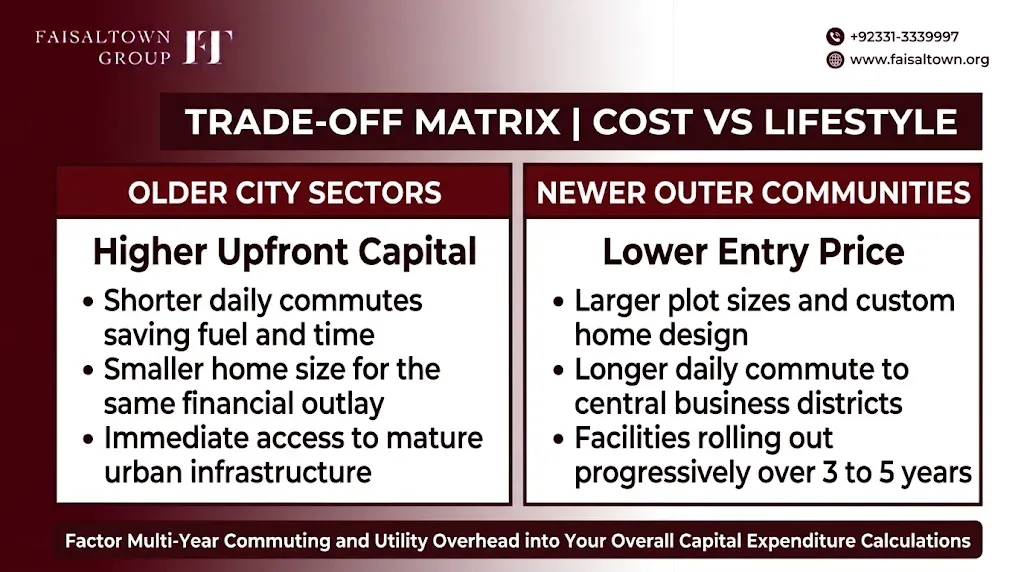
The comparison below shows the kinds of trade-offs families usually weigh:
| Factor | Older Sector | Newer Community |
| Plot or house price | Higher | Usually lower |
| Home size for the money | Smaller | Larger |
| Facilities on day one | Mostly in place | Often still developing |
| Daily commute | Usually shorter | Often longer |
| Approval checks needed | Fewer | More |
A longer commute means more fuel, more time on the road and less time at home. If a school or hospital isn’t open yet, you may be driving back into the city for both. None of this rules out a newer community, but it’s worth adding these costs to your thinking before you decide that the cheaper plot is the better deal. Some families find a middle path in an apartment closer to work, which can cut the commute even if the living space is smaller.
If you’re weighing a newer community, study its layout before you visit. The Faisal Town Phase 2 master plan, for example, shows how sectors, main roads and commercial areas are planned, which helps you judge where daily needs will sit once the area is built.
5. The Pressures That Come With Growth
Islamabad’s appeal isn’t free of problems. Public schools are crowded, with classes meant for about 30 students often holding 40 or more, the same APP report noted. The News reported in February 2026 that fast construction has cost the city trees and green cover, and that some sectors still face water shortages, winter gas cuts and limited public hospital capacity.
These pressures tend to grow as more people arrive. A family planning to stay for twenty years should ask not only what an area offers today, but how it’s likely to cope as its population rises.
The outer zones bring a different risk. Not every scheme on the edges is approved, and CDA has sealed offices of several unapproved schemes in 2026. If you plan to live somewhere for decades, the scheme’s status needs to be confirmed on CDA’s private housing schemes register before you buy, not after. For land in Rawalpindi district, the same check applies on the RDA’s lists.
6. A Fair Look at the Alternatives
Islamabad isn’t the right answer for every family. Rawalpindi and other cities can offer lower costs, bigger homes and family networks close by, and for some households those matter more than planned sectors and green belts.
So the real question isn’t whether Islamabad is good. It’s which compromise works for you:
- Location versus plot size
- A finished area now versus a growing one later
- Monthly cost versus long-term comfort
- Distance to work versus distance to family
Being honest about these trade-offs early makes the final choice much easier. Some families sit down and rank these four points before they look at a single property, and they often find the decision becomes much clearer once they do.
7. How to Plan a Long-Term Move
A move you expect to last twenty years deserves more planning than a quick property visit. Families who settle well usually follow a simple order.
Start With Daily Life, Not the Property
Write down the places your family goes every week: school, work, hospital, grandparents, the market. Then look at which areas keep most of those within a reasonable drive. This narrows the search before you’ve looked at a single listing, and it stops a good-looking house from pulling you into the wrong part of the city.
Visit at the Times That Matter
Visit your shortlisted areas at the times you’ll actually be travelling. A road that feels empty on a Sunday afternoon can be slow at eight on a weekday morning. Try the school run and the office commute at least once each, and note how long they really take.
Check the Paperwork Before You Fall for a Place
It’s easy to like an area and only then think about approvals. Do it the other way round. Confirm the scheme on CDA’s register or RDA’s lists, ask what facilities are open today, and get any promises about development dates in writing.
Give Yourself a Trial Period
If you can, rent in the area for a few months before you buy. Living somewhere, even briefly, tells you more about water supply, noise, neighbours and travel than any number of visits. Many families find that a short rental either confirms their choice or saves them from an expensive mistake.
Planning a Family Move to Islamabad? Let Us Help You Weigh Your Options
Families choose Islamabad for planning, services, work and a calmer pace of life, and the ones who settle happily weigh daily life as carefully as price. Shortlist two or three areas, time the real commute on a weekday, and check any new scheme on CDA’s or RDA’s official records before you pay. If you’d like to talk through which areas suit your family, call or WhatsApp our team at +92 331 3339997, or email info@faisaltown.org, and we’ll go through your options honestly.
FAQs
Is Islamabad a good city for families?
Many families find it so because of its planning, schools, hospitals and calmer pace, though crowding in public schools and pressure on water and green space are real issues.
Why is Islamabad’s population growing faster outside the main sectors?
The 2023 census shows rural areas growing at 3.97% a year against 1.59% in urban areas, as limited space and high prices inside the sectors push households outward.
Should families buy in an older sector or a newer community?
It depends on your priorities. Older sectors offer finished services now, while newer communities usually offer more space for the money but need time to develop.
How can I check if a new housing scheme is approved?
Search the exact scheme name on CDA’s private housing schemes register for Islamabad, or on RDA’s lists for Rawalpindi district.
Is it a good idea to rent before buying in Islamabad?
For a long-term move it often is. A few months of renting shows you the real commute, water supply and neighbourhood before you commit to a purchase.
Is living on the edge of Islamabad cheaper overall?
The plot or house is often cheaper, but a longer commute and travel for schools or hospitals can add to monthly costs, so compare the full picture.